
This blog post series about “why we have dreams” was originally going to be a four-part series, but I’ve decided to reduce it to two parts since I recently found a way to explain everything in one post using images and visualizations instead words, since written language was failing me to explain consciousness and dreams.
You can read Part I here, but it is not necessary to do so to follow this post. Part I was always meant to be a brief, introductory post for the entire series, where I discuss a few of my unique dream experiences and pose questions about why we have dreams, but never provide any answers; those were always meant to be provided over the subsequent three posts, which I’ve now done in this one blog post!
Anyways, I’m thrilled and excited to finally share with you my second and final blog post of the series. Enjoy!
What if Our Universe & the Dream World Are the Same Thing?…My Thoughts About Why We Dream at Night – Part II
by Kendall Beaver
I recently went hiking and camping in Yosemite National Park for six days with a buddy of mine who loves hiking, and while we had a fun and amazing experience, to say the least, I believe I had a more profound and insightful experience than he did because Yosemite—a.k.a. “The Universe”—provided me with a single answer to two questions that I had been trying to answer with this blog series, but was failing to do so even after I published my last blog post: What is consciousness? & Why do we have dreams?
The answer came to me on my third night when I decided to sleep outside in my hammock instead of my tent, inspired by our campsite neighbor Laura—an amazing soul and young woman from Germany. I saw Laura sleeping in her hammock over the previous two nights and decided that I wanted the same experience, at least for one night because I found that it got cold overnight, and I really don’t like the cold.
So I put on a layer of thin, thermal clothes; placed my sleeping bag inside of my hammock then crawled inside; zipped myself all the way up, only exposing my face to the elements, looking and feeling like a cocooned caterpillar; I squirmed around until I got comfortable; then I looked up and was completely blown away by the millions, perhaps billions of stars that I saw above me that were twinkling and shimmering across the entire night sky.
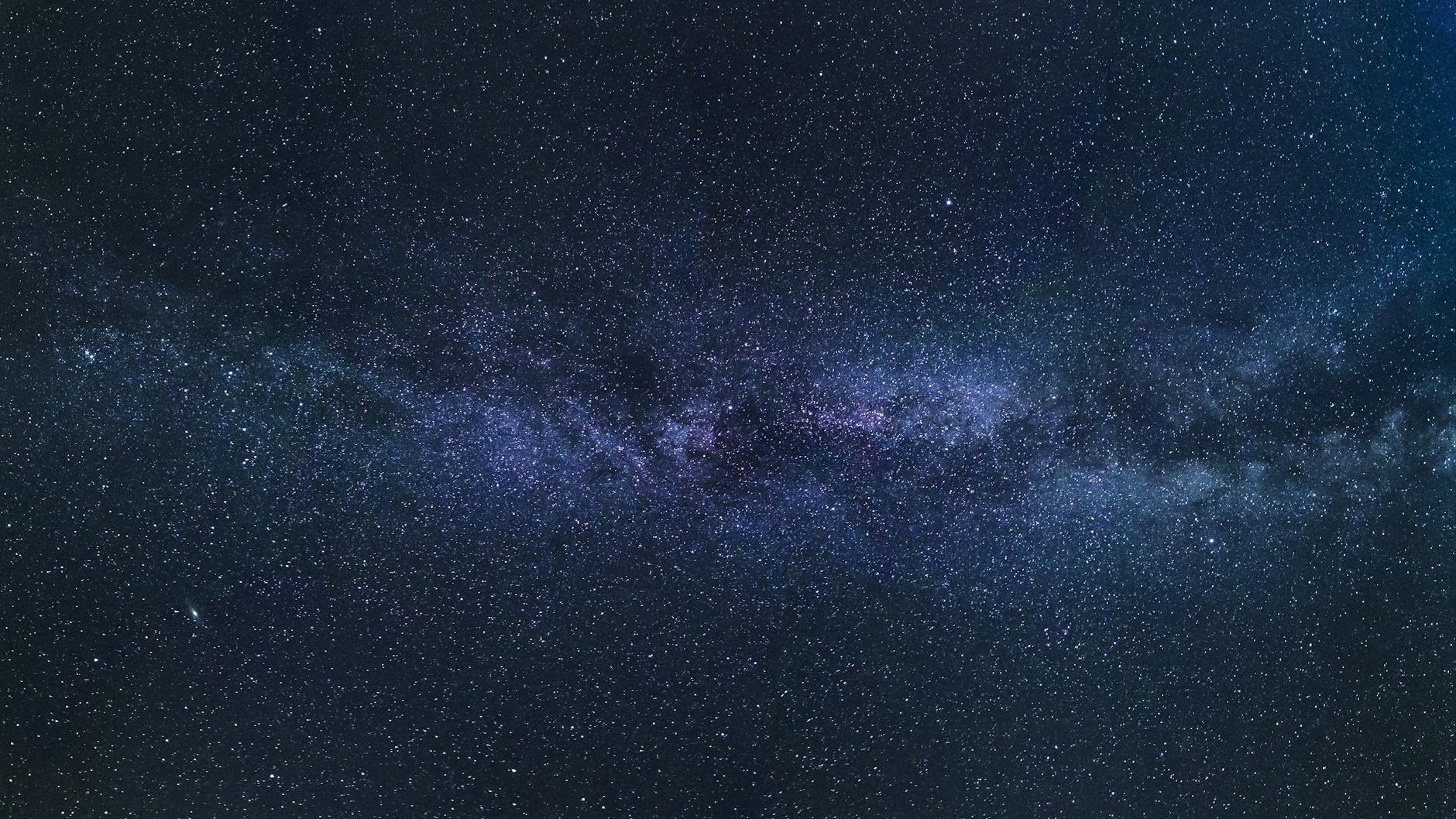
“God…” I uttered, then thought about how infinite our universe is: I thought about how our most advanced telescopes can only see so far out into the universe, what we call “the observable universe,” but that our universe must surely go on for forever and never truly end…
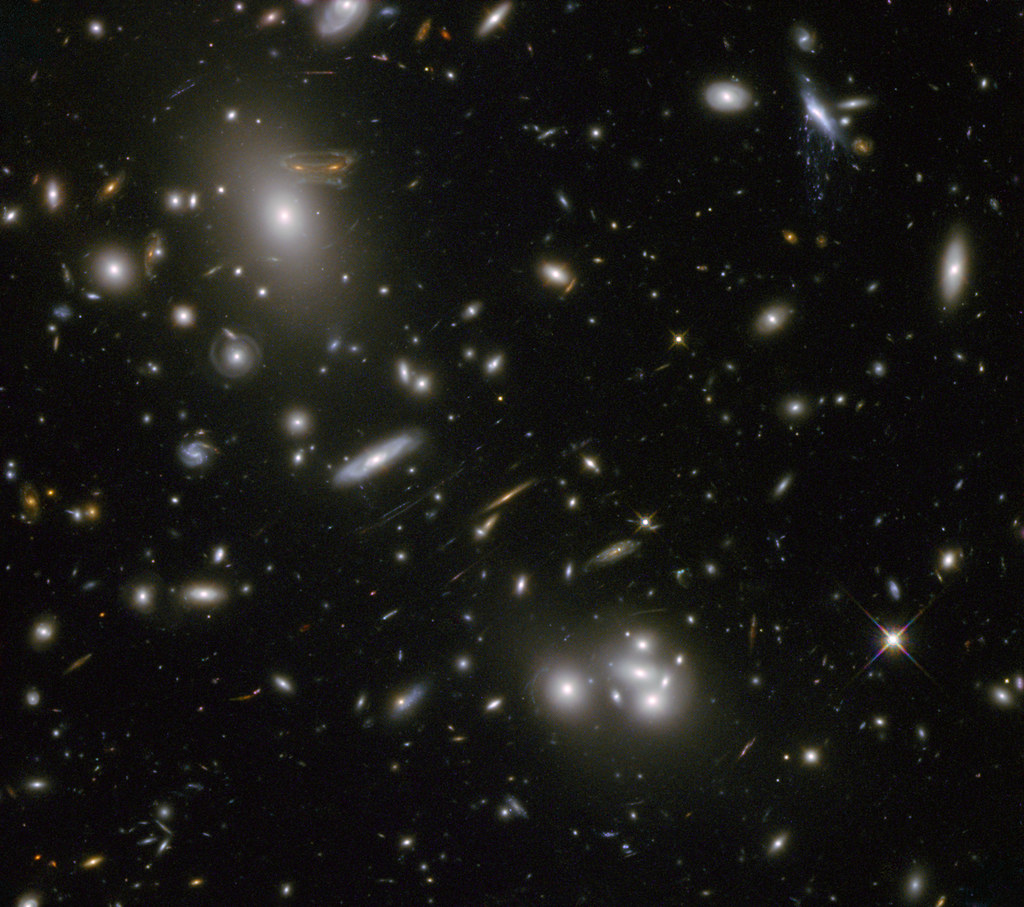
Then I thought about how our consciousness is like the universe, how mysterious, complex, and infinite the human mind is—a “black box” as we often call it…
Then I imagined myself holding a glass jar and scooping up some of our infinite universe and putting a lid on top and sealing it shut…
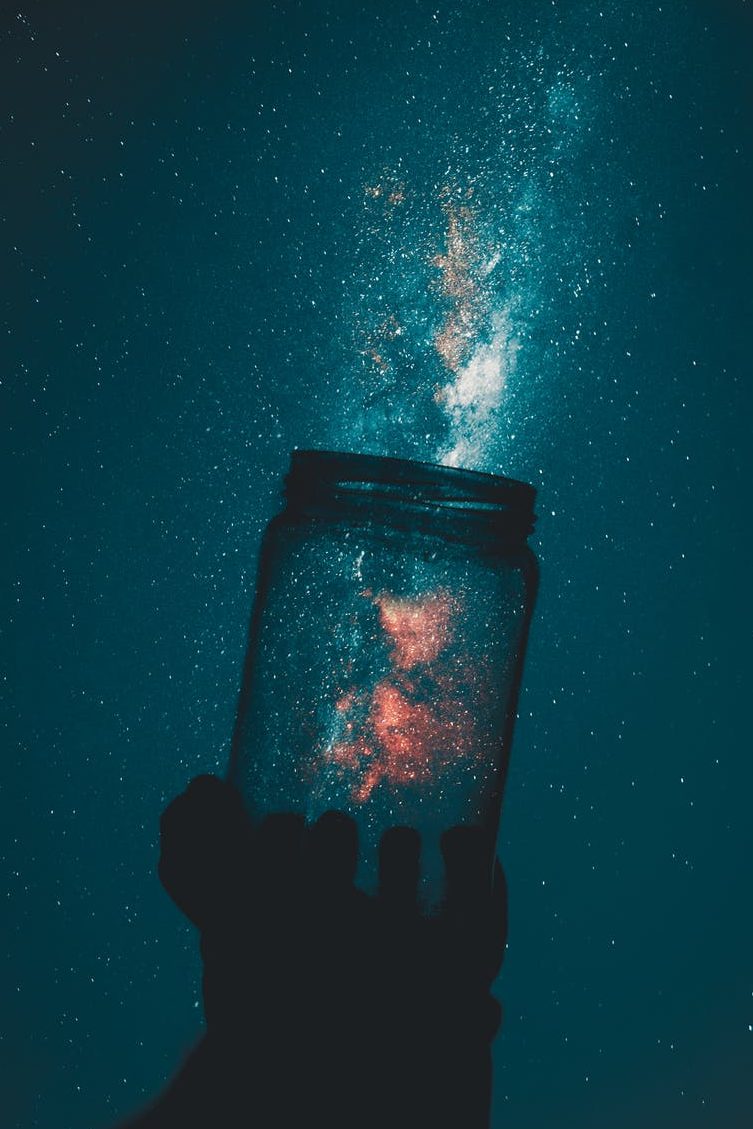
I thought about how this jar would have it’s own distinct and infinite consciousness with it’s own personality, thoughts, and memories that can only be seen by the owner of this jar…
I thought about how our bodies are like the glass jar and how our consciousness must come from an infinite and abstract source such as the universe, especially since scientists still can’t prove to this day that the human brain produces consciousness…
I thought about the ways that we can open the lid to our glass jar or perhaps transmute it altogether since glass jars and our bodies are not 100% solid matter and all energy in the universe is vibrating at a certain frequency; but in order to move consciousness beyond the walls of said container you would perhaps need to vibrate at a higher frequency than the natural frequency of the container itself, which seems to occur naturally when you spend time with someone whose company you really enjoy, and most especially when you get physical and intimate with someone you really like and completely lose yourself to them through sex…

I then thought about the flip side of this where you’re vibrating at a frequency lower than the container itself and can still move consciousness through said barrier, but instead of sharing your consciousness with someone else you’re sharing it with the entire universe, which can be done through more calming acts such as meditation, journaling, writing, painting, walking, etc…

I then thought about one of the lowest states of vibration possible, one that this blog series is most concerned with—sleep…

Perhaps when we enter that dream-like state, our consciousness transmutes our bodies and joins a part of the universe where all dreams go to and merges together to create one giant dream universe, where we can cross paths with other people who are dreaming, which is why the people we meet in our dreams can feel so real even if we’ve never met them before in real life…
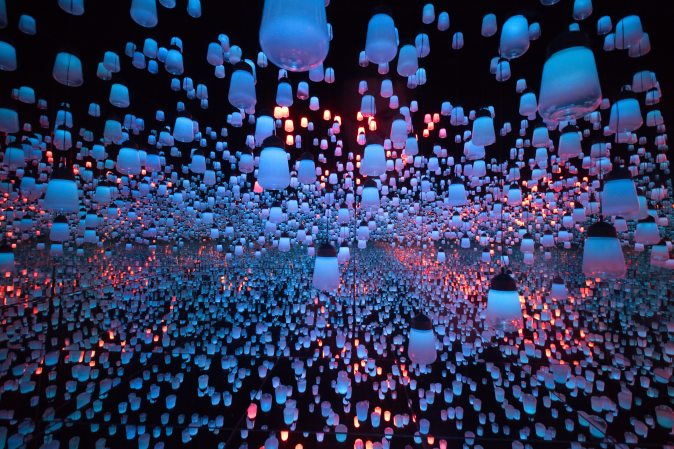
Because, you have to remember that the brain doesn’t produce consciousness, it only processes consciousness—that is, it processes our conscious experience of the waking world…
“…the brain doesn’t produce consciousness, it only processes consciousness…”
And just as likely, the brain doesn’t produce or create dreams either, it only processes “dreams”—that is, it processes our limited, conscious experience of the infinite and abstract universe of consciousness.
“…the brain doesn’t produce or create dreams either, it only processes “dreams”…”
I then imagined an old-school movie projector to represent our brain being inside of this glass jar, which consistently takes in information from our physical universe through our five senses and transforms this information into non-physical energy that gets projected into our consciousness.
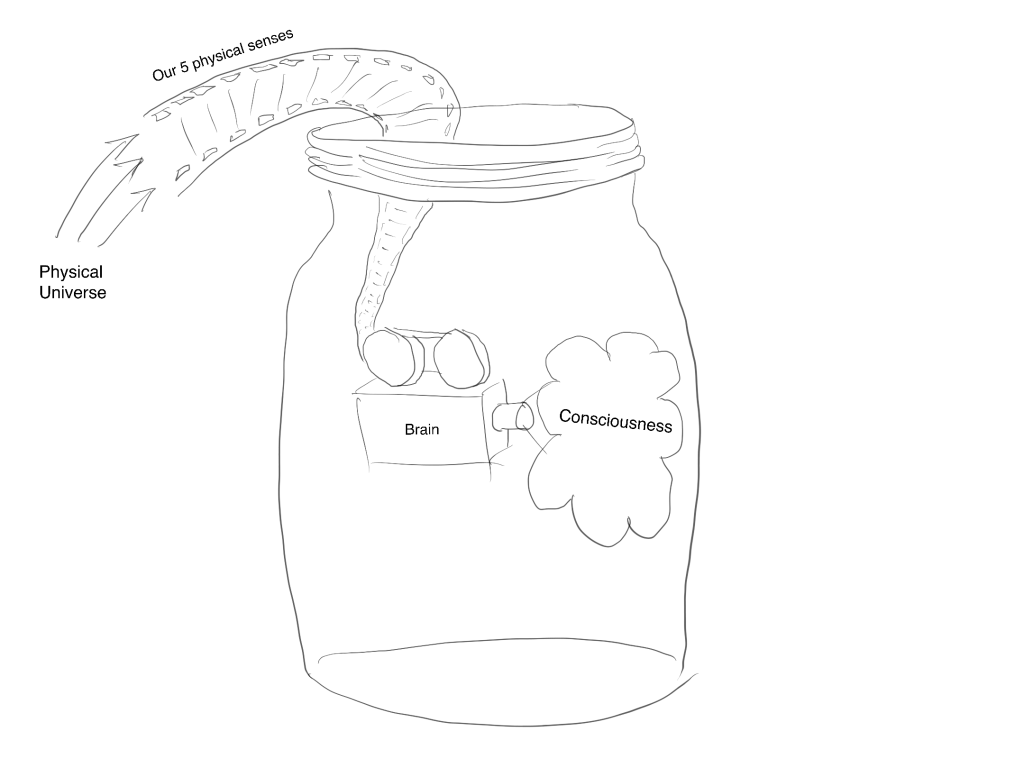
One important thing to point out here is that everyone “sees” the universe differently. For those people who don’t have an impairment with sight, the eyes and brain will use visible light to map out the distance between objects and present an internal image as sighted people are used to seeing it.

For those people who have an impairment with sight, the ears and brain will use sound waves to map out the distance between objects and present an internal image of the world presented before it, but the universe cannot be mapped out internally because stars do not emit sound waves nor would these sound waves be able to travel through the vacuum of space.
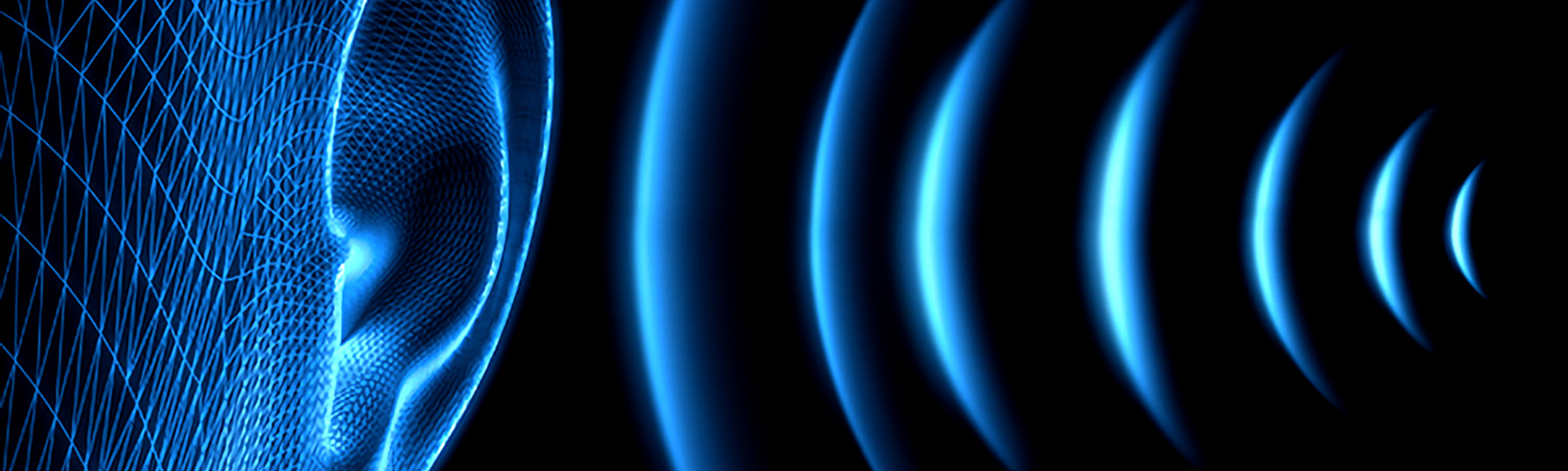
That’s not to say that sighted-impaired persons don’t know what stars are; on the contrary, they experience the warmth and brightness of our own star everyday, so they can understand what the naked eye sees when looking up at the universe, knowing that stars in the sky lie at a greater distance than what can be experienced on Earth.
Now, for people who have an impairment with both sight and sound, the brain will use touch via the skin, which is the largest organ in the human body, to create an internal mapping of the world.

As a fun side note, perhaps stars and black holes (which is just a star that’s exploded and is slowly dying) experience the universe through the electromagnetic energy that they produce and create an internal mapping of the universe based on this energy. Maybe stars never go to sleep and are always “on” and don’t have dreams…
Or maybe they finally get the chance to sleep when they become black holes, and during this last phase of their life when they devour up so much matter and information, they—via their glass jars—have bizarre dreams that they can’t explain, just like we can’t explain what this phenomena is with our glass jars when we go to sleep every night… Just food for thought.

Anyways, back to my point about us humans: Despite how somebody takes in and views our physical reality, this will determine what their dreams will “look” like.

And when we wind down to go to sleep, our nervous system and all of its corresponding electrochemical senses becomes so relaxed that our body becomes nearly comatose and stops taking in information from our physical universe. This suppression keeps our brain from being in active brain wave states and allows our body the necessary time to perform maintenance and repair on itself without being interrupted by our own, active consciousness.
Whenever sleep researchers want to measure the electrical activity produced by the brain at night, they will use a test called electroencephalography (“EEG”), where electrodes are placed over a subject’s head and readings are recorded over a period of time, which produces a visualization of our “brain waves.” This technology, however, can’t get a perfect and precise reading of approximately all 100 billion neurons due to the limited amount of electrodes being used, not to mention the muscle and bone protecting the brain that creates additional barriers, but EEG at least gives researchers a better view of the brain’s activity throughout the night.
Empirical data tells us that our brain will oscillate through all five of the brain wave states throughout the night: delta (≈ 0.5 – 4 Hz), theta (≈ 4 – 8 Hz), alpha (≈ 8 – 13 Hz), beta (≈ 13 – 30 Hz), and gamma (≈ 30 – 100 Hz); but the brain will primarily reside in the first three, lower brain wave states during sleep.
But what we are unsure of, though, is what happens to our brain when it’s not processing information from our physical universe, and this is where I believe that our brain will turn it’s attention to processing non-physical information from two sources: 1.) from our consciousness, where events from the day are processed and stored as memories, as well as where past memories are relived; and 2.) from the infinite and abstract universe of consciousness where a dimension of our dreams reside, which would explain all of the weird shit in our dreams that we can’t explain—so dreams are a mix of these two conscious universes coming together.
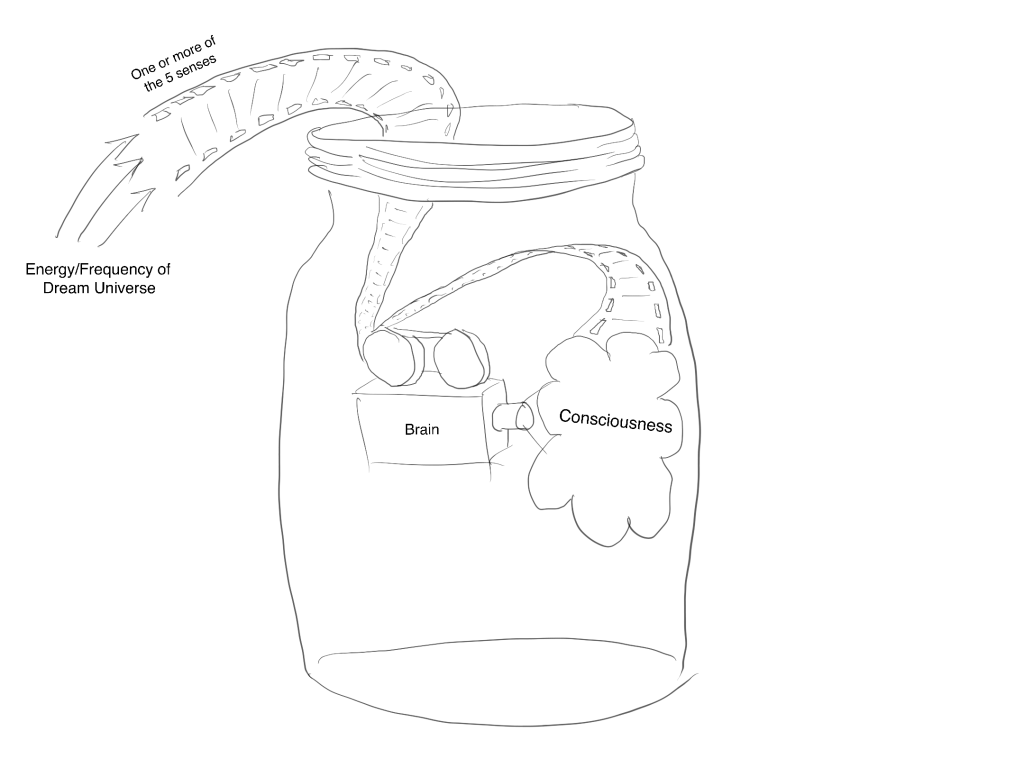
The reason I believe this is because the brain doesn’t create or produce dreams, just as it doesn’t create or produce consciousness; remember, the brain just processes whatever information is presented before it.
But let’s say that the brain had a mind of its own and was creative enough to mash together random images and memories to create our dreams, then the brain would need more glucose and oxygen from the body (since the brain doesn’t store any energy) in order to constantly think up these tasks—and that’s on top of the energy already being used by the body to fix and repair itself throughout the night. Therefore, creating dreams would be a waste of energy that the brain would have dumped this ability a long time ago in order to ensure our survival, thus we would have evolved to be a dreamless species.
Nor are we consciously able to create our own dreams because we’re in too low of a conscious state to do so, we’d need to raise our consciousness up to the theta state for something like this—but then we would catapult ourselves awake every time we began creating a dream, and thus we still would have evolved to be a dreamless species!
So if we and/or are brains are not creating dreams then there’s only one other place where it can be “created”—from the infinite and abstract consciousness both inside and outside of our glass jar…
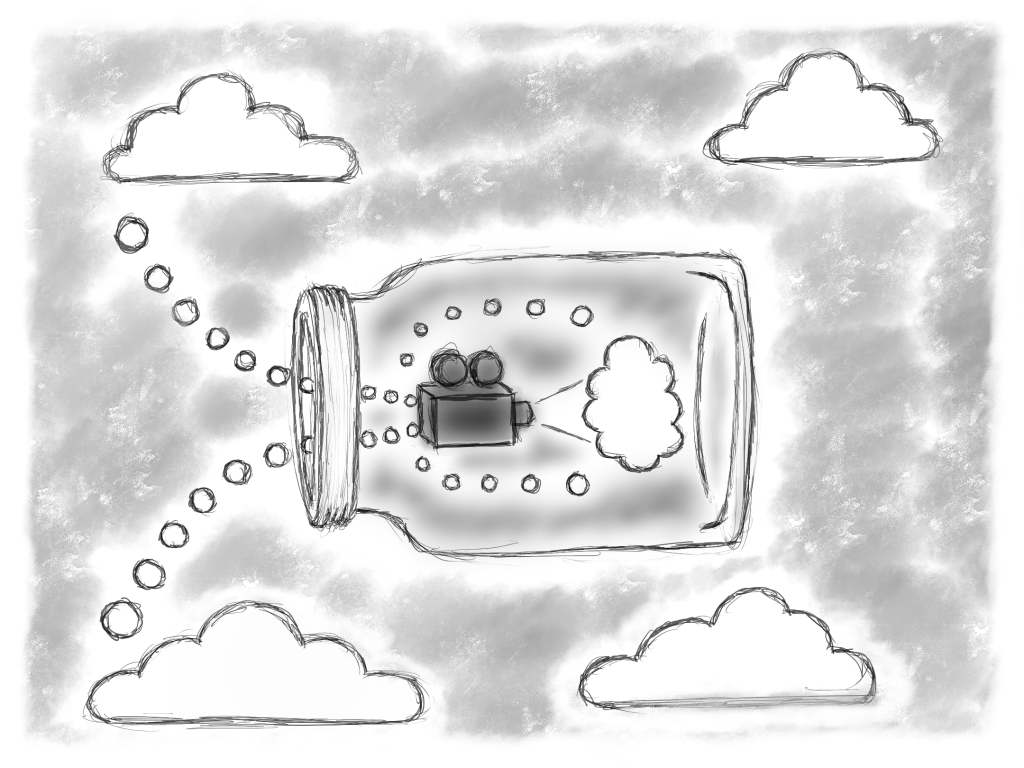
Now, similar to how your brain processes information when you’re awake, your brain will call upon your memories and stored knowledge of the world to “translate” and make sense of a dream, especially those that come from outside your own consciousness.
So based on your understanding of distance and space, your brain will create an internal mapping using light waves, sound waves, and/or spatial dimension; it will show you settings and locations that you’ve visited or construct places that seem familiar to you; translate any communication into a language that you understand; etc.
For example, if you don’t speak Russian and have never been to Antartica then you won’t have a dream where you’re fluently conversing with someone in Russian while kicking back in Antarctica. But never say never, because anything can happen in the bizarre world of dreams…and it’s possible that you may have had this exact dream before but forgot it the moment you woke up.

But I do believe that it’s possible for a person and any of their attributes (the language they speak, clothes and accessories they wear, etc.) to not be entirely translated by our brain and can appear can as-is in your dream. This may be why a stranger looks and feels completely real, and the same can be said for any non-human entity you’ve encountered, such as an extraterrestrial or a dark cloud called a “shadow spirit.” Again, never say never…
Since our brain goes through different states throughout the night, I believe that when it hits certain frequencies it has the ability to process and project a dream into our consciousness. It’s like a light switch being turned on and off: When it’s on, we see a dream—when it’s off, we don’t see a dream.
Note that we’re still “alive” when the light switch is off, it’s just that our brain has nothing to process—no space, time, or energy. This appears as complete darkness to us, but is simply a void, which you’re aware of if you take a quick power nap and don’t have any dreams, because you’re still conscious and aware enough to know that you’re seeing “nothing.”
Anyways, when the light switch is off, it’s possible that we’re freed from our brain, our glass jar, and can travel to any dream we want to, where the dreamer’s brain would process us and we’d show up as ourselves or possibly as someone they’re familiar with. And if we got to show up as ourself then we would be a stranger in their dream who “feels completely real”…
Maybe when the light switch is off, our consciousness becomes infinite and we get to be in everyone’s dream all at once. We wouldn’t know about this, though, because our brain is off and can’t process any of this crazy and multidimensional information, but even if our brain received this information it wouldn’t know how to process it since there’s no instructions in our memory about how to make sense of this bizarre phenomena, so it would either pick out a random dream to show us or disregard everything altogether since it’ll be too cumbersome to process.
Then, when the light switch gets turned back on, maybe our infinite consciousness collapses down into a finite consciousness and we reappear in our glass jar and get to experience the dream that our brain is processing, an all’s well that ends well.
But maybe we’re not infinite per se…maybe there are separate, past versions of us that are stored in memories, which get stored in some other realm of the universe, which can even include alternative versions of us in “alternative memories.” Therefore, dreamers can interact with any possible version of us in their dream, just as we can interact with any possible version of them in our dream…

If there are alternative memories of us, then maybe there are “future memories” of us, too, which we call a “premonition dream,” where we can get a glimpse of what happens in our future. And when these dreams do occur in real life, we tend to call this a “deja vu” moment and often have a confused and dumbfounded look on our face, trying to figure out where we last saw this moment…
Which, I need to say something very important about time, that it isn’t real. Time is just a concept we made up to organize our activities and plan accordingly for the future, like with the Gregorian calendar that we use today. But there is no such thing as time! There is only space—more specifically, there is only movement through space, which we consider to be “time.”
For example, when you travel to the grocery store you mentally segment out some distance, say from your house to the grocery store and back, then measure how fast it took you to move through space. If it took you twice as long on this trip than on the last trip, then it’s not that time “was slow” or “took forever,” but that physical conditions had a greater affect with how you moved through space—whether due to your own actions, the weather, traffic, crowd, there not being enough registers/self-checkout kiosks opened, etc.
What makes time confusing for us is that when we think of time, we think of a clock, but clocks are based on the rate that it takes for Earth to make one full spin on its axis, what we know as twenty-four hours in a day, plus a subset of hours, minutes, and seconds. So our clocks are just tracking Earth’s movement through space, not our own, and since everybody is moving at a different rate on the planet, everyone has their own sense of time. In some primitive or non-Western societies, people may not even use the clocks at all and thus really have their own definition and perception of time.
But time is nothing more than our consciousness moving through space. Everything in our universe comes down to this last statement, and I think this is why our universe was created, so that consciousness can experience moving through space in different forms of matter and energy, in different “glass jars”… And I think the reason why we’re always moving through space is to connect with other forms of consciousness, which is mirrored in our dreams since we’re always appearing in different places and meeting other people, and when we do this same thing when awake, that’s when we feel like we’re “living in a dream…”
Anyways, I bring up these points up about time and space because this is why we can’t remember our dreams, because we never actually moved through space even though our consciousness believed we were doing so when the dreaming was occurring.
The thing to know about memories is that they’re all associated with some of sort of physical sensation, save for some repetitive memorization of facts and figures in school, but the greater the sensation the greater the memory.
The same can be said for dreams, where there needs to be some sort of significant, physical sensation caused by the dream for it to be processed by the brain and stored as a memory. This is why you can easily remember a nightmare, or a dream that made you cry, or a blissful dream that caused you to wake up with a wide smile on your face. If the sensation isn’t there then the dream will be lost forever and you must immediately record it as soon as you wake up.
Sadly, though, our experience in the dream world must ultimately come to an end and our consciousness is forced to return back into our physical universe. Waking up dazed and confused, we take a moment to make sense of where we are and what we just experienced, realizing that none of it was real, that it was all just a dream… Then we quickly shift into survival mode and get ready to go about our day so we can provide for ourselves and possibly others, immediately forgetting about our dream experiences, never to give it a second thought…
Then we get to come back to our beds after a long day and drift back to sleep and, fortunately, get to experience this all over again. And this cycle gets repeated night after night, year after year, until our biological spacesuit gives out and our unique experience in this reality finally comes to an end…
Then our consciousness returns back to where it came from, from our bizarre, infinite and mysterious universe, and then we finally get to “wake up” and return back to our original state of consciousness. But we’re confused by being here…until we realize that our experience as a human being was just a dream, and the illusion was so good that we believed dreams were the other way around… Regardless, we’re just glad to be back home.
And all of this, my friends, is why I believe we have “dreams.”

Acknowledgments & One Last Story, a “Bedtime Story”
Before I end this blog post, I don’t want you to think that everything I mentioned above was thought of in one night while sleeping in a hammock at Yosemite, and if you do the same thing then you’ll have all of the insights and knowledge instantly downloaded to your head. On the contrary, I began researching this topic back in October 2019, devouring the latest research in neuroscience, molecular biology, sleep physics, and quantum physics. I even looked to spiritual texts to explain dreams, wrote down and studied my own dreams over time, and talked to anybody and everybody about their thoughts and dream experiences.
All of my research ultimately formed the thoughts and beliefs that I currently have about dreams, but I could never find a way to explain everything in as short and simple a way as possible—until that one night in Yosemite when I imagined a glass jar scooping up the universe, and that brought everything together in the most simple way possible. So no, the universe didn’t automatically give me all of the insights and knowledge for this post, that was always going to require the hard, painstaking work of research. There are no shortcuts to writing, just as there are no shortcuts when you’re doing anything new and challenging in life.
Since returning from my trip, I’ve often wondered what if I didn’t go to Yosemite, would I still have been able to write this blog post the way that I have, or would I have written three more blog posts that may have gotten lost in its own details and not be as effective? I don’t know. The only thing that I can say for certain is that I did go to Yosemite and I did write this blog post in the way that I did, and I’m glad that everything turned out the way it did. It’s like a phrase that my campsite friend Laura kept saying throughout my stay: “What’s meant to be is meant to be.” So I guess all of this was always meant to be…
On that note, I want to end this blog post with a story of a waiter I met in Los Angeles who gave me one of the most interesting perspectives about dreams, one that was so unique that it ultimately inspired me to use it for the title of this blog series.
This occurred back in October 2021, when I flew from Philadelphia to Los Angeles for a five-day getaway, and in order to save money I stayed with my cousin and his fiancé at their apartment near Venice Beach. On my last morning in LA—a Tuesday, October 5th, to be exact—I randomly decided to stop by a coffee shop down the street from their place to get some light brunch before catching my mid-afternoon flight back home.
I walked into the coffee shop, called Ten (a.k.a. Ten Cafe), which was boojie- and sleek-looking, but has now since closed. No one was sitting inside; a handful of customers were sitting outside on the front patio working remotely on their laptop.

A young man named Joe was standing at the counter and welcomed me to the cafe. He was of Hispanic descent, in his late 20s or early 30s, and had a unique and cool vibe to him. I said I wanted to eat there, inside, then he showed me to a table. As I sat down I noticed his unique, spiral-designed silver necklace around his neck and couldn’t help but complement how cool it was.
Joe told me that he designed his necklace himself and even sourced the material from South America and searched far and wide to find the right artist who could bring his unique vision to life, having found a talented artist from Mexico. After asking about me and telling him that I was in town visiting and was about to leave, I told him about the highlights of my trip: going to a Dodgers game, biking along the beach everyday, eating at different restaurants with my cousin and his fiancé, and randomly coming across a cool store on my bike, Mystic Journey Bookstore, where I bought a book about dreams (Llewellyn’s Little Book of Dreams by Dr. Michael Lennox).
That last part catapulted us into a conversation about spirituality, where Joe told me about the time he traveled across Central and South America to go on a spiritual quest, meeting many different shamans and spiritual people who helped him learn more about himself and our universe.
Then two customers showed up at the front counter and he left to go help them with a pick-up order. While he was away, I thought about what he said and realized that if he traveled across the lower half of our hemisphere and met many spiritual people along his way, then surely most, if not all of them had something to say about dreams.
So when Joe returned with the cup of coffee that I ordered, I said, “Hey man, got a quick question: So out of all the travels you did across South America, did you come across any shamans who had anything to say about dreams?”
He stared at me for a long moment, then a grin formed across his face and he said, “That’s an interesting one… So out of all the shamans I met, even though they spoke different languages, they all had the same thing to say about dreams—that the dream world and our world are the same thing, and it’s an illusion to think otherwise.”
This was the first time I ever heard something like that, so I was, of course, blown away by what he said, which has always stuck with me. And I often wonder if I was meant to meet Joe to hear his message to help me with this blog post; just like I was meant to meet Laura and be inspired by her to rough out a cold night and ultimately come up with the glass jar analogy; just like I was meant to move to Philadelphia many years ago and become friends with my buddy who planned our Yosemite trip; and just like I was meant to meet everyone else in my life who helped me in some way to be able to write this blog post series.
Maybe all of this really is just a dream…
Maybe our glass jars are just an illusion…
And maybe our universe and the dream world really are the same thing…
Maybe, just maybe…
Sweet dreams, my friends,
Kendall
- Feature image of “Silhouette of Trees during Nighttime” by Neale LaSalle on Pexels.com.
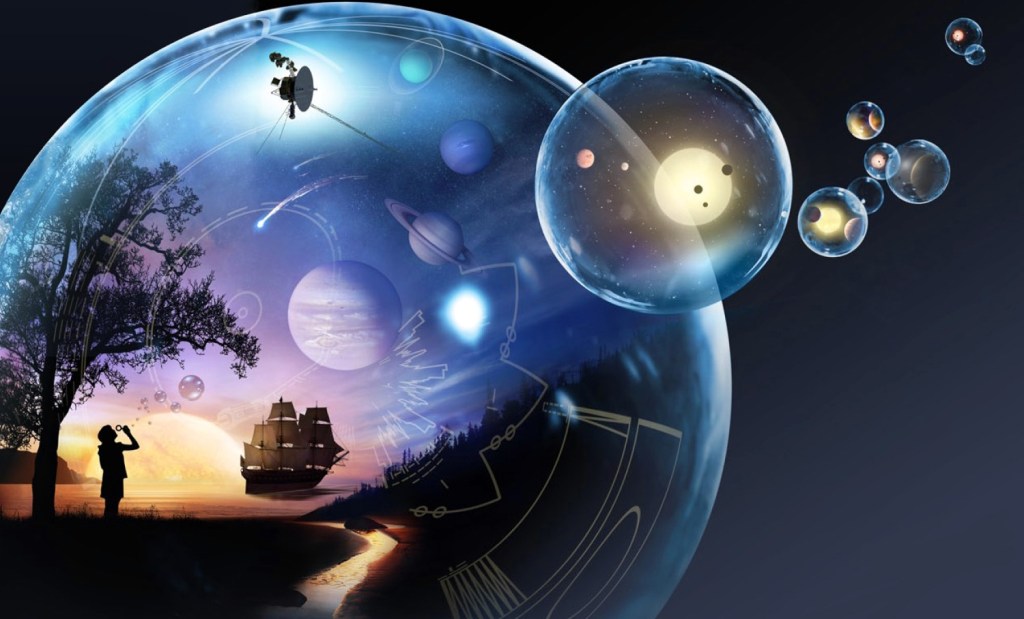
- Opening image of “NASA child bubble exploration” (2011) illustrated by NASA. Original public domain image from Wikimedia Commons. Digitally enhanced by rawpixel.


 Kendall Beaver
love to read your reflections! Always gets me thinking. Let’s plan on a get together when we get back.Peg
LikeLike
Thanks! And you got it. 😉
LikeLike